


Did you hear about the AI robot that got PTSD?

Did you hear about the AI robot that suffered PTSD after an encounter with a lion in Africa?
The story went viral on social media this week.
The Experiment: A lion, a robot and a very bad idea.
A leading AI company decided to push the limits of machine learning in an unconventional way, by testing emotional intelligence in the wild...literally. They developed a prototype robot designed to recognize emotions by training it on thousands of animal images, hundreds of psychology textbooks and large datasets of human expressions (joy, sadness, anger, fear, etc.).
And it worked! The robot could identify a frown, detect anxiety and even classify subtle emotional cues in animals. The next step? Field testing. So, the engineers brought their prototype to the African wilderness to meet... a lion! (picture below)
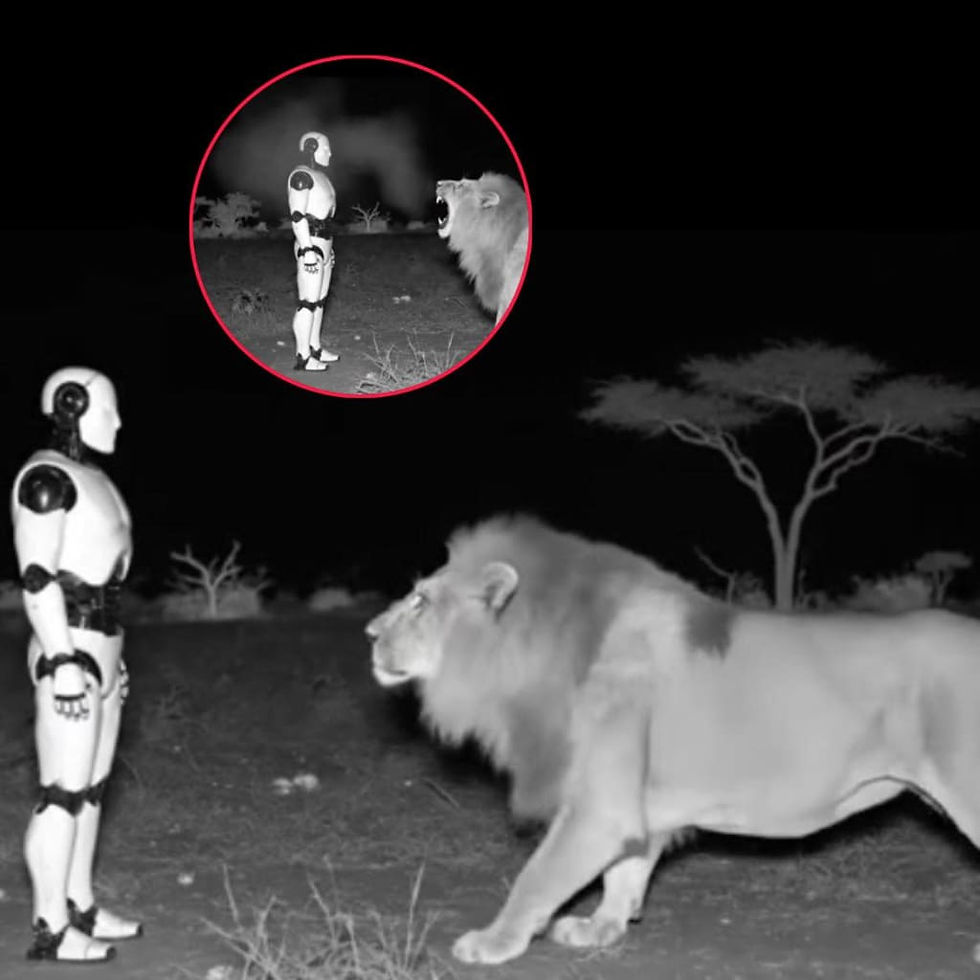
How did the robot react? “Cat Big. Scared!”
Then its system froze, the logs repeating “Cat big. Scared.” over and over before shutting down a few minutes later.
The engineers attempted to reboot it. Memory wipes. Debugging sessions. Nothing worked. Every time the robot saw a four-legged creature afterward, whether a goat, a dog, or even a harmless house cat it gave the same error, “No. Scared.”
The engineers realized they might be dealing with the first-ever case of PTSD in artificial intelligence. For eight months the AI refused to “unlearn” its fear of animals. The lion encounter had hardwired terror into its neural pathways.
The financial damage was staggering - eight months lost and half a million dollars wasted
Engineers eventually had to rip out a section of the CPU and re-engineer it. This alone cost the company nearly $500,000. It was a brutal reminder that sometimes pushing the boundaries comes with a very real and very expensive price tag.
The Takeaway
Great story, right? A little ....too good? There certainly was AI involved, but it was in generating that picture of the robot and the lion. According to snopes.com, the story appeared on the Facebook page StoryTime, which got more than 186,000 reactions and countless reposts since it appeared about 6 days ago.
So, here's the important lesson: be skeptical of everything you see online.
New miracle cure? 🤔
The perfect romantic partner? 🤔
Easy money working part-time from home? 🤔
Your computer is suddenly infected and you need to mail gift cards to the FBI? 🤔
This is how the scammers win. We all need to be more skeptical. Here are my top 3 picks for websites that will help you beat the BS:
Snopes.com. One of the oldest and largest fact-checking websites, widely known for investigating and debunking internet rumors, urban legends, and misinformation.
PolitiFact.com. A nonpartisan fact-checking website that rates the accuracy of claims made by elected officials and other public figures in American politics.
Leadstories.com. A fact-checking website that identifies and debunks false, misleading, or inaccurate information circulating on the internet.
Stay skeptical and stay safe out there.
-Attila
New Funnies!
Why don't computers like to be outside?
There are too many bugs.
What kind of leak can't be fixed by a plumber?
A data leak.
Why did the computer go on a diet?
It had too many bytes.
Why doesn't AI fight with humans?
Because it already knows the outcome.


Comments